The Body Needs a Bridge From Stress to Rest
Jun 04, 2026
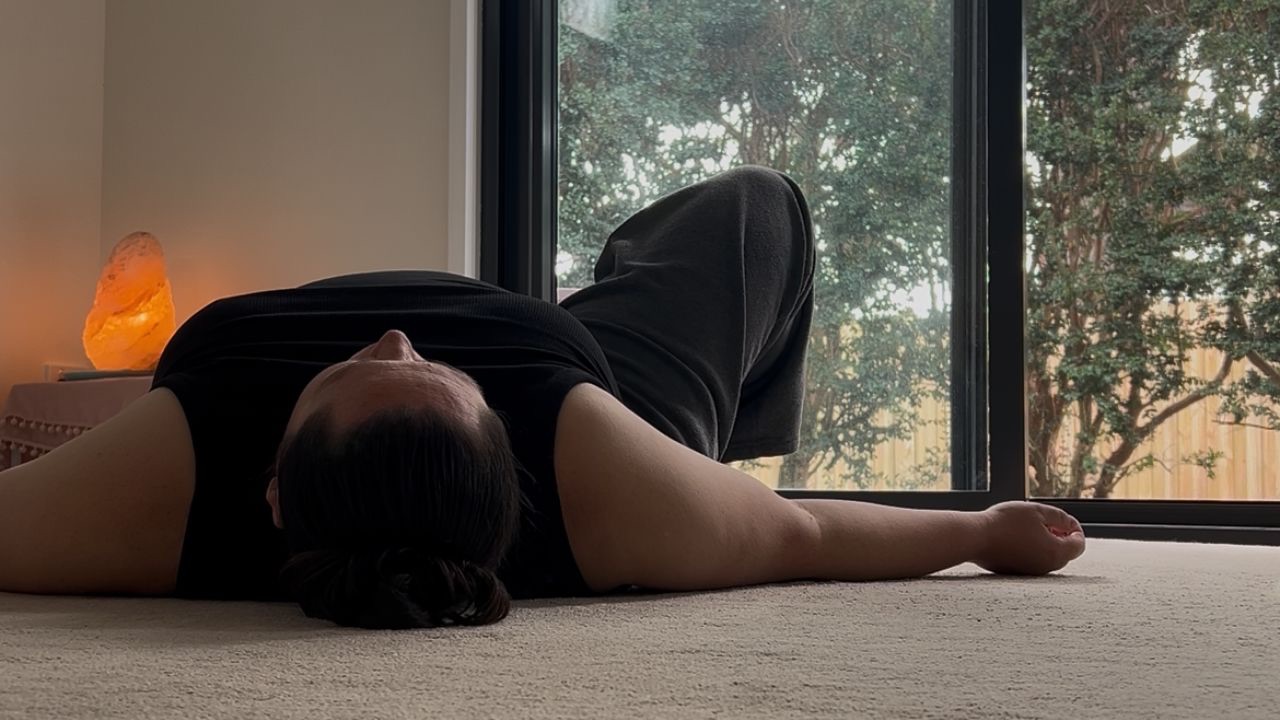
There's a moment many people recognise but rarely name.
You stop. You sit down. You finally have the time.
And instead of softening, your body stays alert, slightly braced and still holding something you can't quite put down.
Rest is available. It just doesn't arrive.
This isn't a failure of willpower or that you're doing relaxation wrong. It's simply that the body doesn't shift states the way a light switch does.
It needs a bridge.
Why rest doesn't always feel restful
When you've been carrying stress for a while, the kind that builds quietly over weeks, not just one hard day, your body adapts to it. It learns to stay ready. Shoulders held a little higher, breath a little shallower, jaw a little tighter, mind already scanning for the next thing.
That pattern doesn't dissolve the moment the stressor does.
So when you finally sit down and try to relax, your system doesn't always follow. Not because it's broken. But because it hasn't been brought there gently.
The step most of us skip
We tend to treat stress and rest as opposites. As if stopping the doing, automatically starts the recovering but the body rarely moves in straight lines.
There's usually something in between.
A gradual softening. A slow unwinding of the held places. A moment where the system starts to understand it's no longer needed in the same way.
Most of us skip this step entirely. We move from full doing straight into trying to be still and then wonder why the stillness feels uncomfortable, or impossible, or just out of reach.
What a bridge actually does
Gentle movement…the kind that's slow and supported and asks nothing of you, offers the body something stillness alone sometimes can't.
It says: nothing is required of you right now.
A long exhale, a comfortable twist, a few minutes of lying on the floor and feeling the weight of your own body. These aren't complicated practices but they give the nervous system somewhere to go, a gradual pathway from braced to soft, from held to eased.
This is not exercise. It's not about what the body can do. It's about helping the body remember that it's safe to soften.
Why stillness alone sometimes isn't enough
There's a reason some people try meditation or yoga and walk away feeling like they ‘can’t relax’ They didn't fail they were just asked to skip the bridge.
When the body is already activated, stillness can feel like pressure, one more thing to achieve, one more way to fall short.
Rest doesn't begin with silence. It begins with permission to transition.
A quieter way
At Yin Haven, movement isn't the point. The arrival is.
Each practice is shaped around this idea of a bridge… slow, supported movement that help the body move out of holding and into ease. Not by forcing anything. Not by performing stillness. Just by creating the conditions where rest can begin to arrive on its own terms.
Because it will. The body already knows how to rest. It just needs to feel safe enough to begin.
If this resonates
If you recognise yourself in this, tired but wired, still holding long after the day is done, you might find it helpful to start with movement before stillness.
Not intensity. Not effort. Just a gentle transition.
That’s what the Yin Haven free class is designed to support.
Ten minutes. The floor. A slower pace held for you.
A small bridge back into rest.
